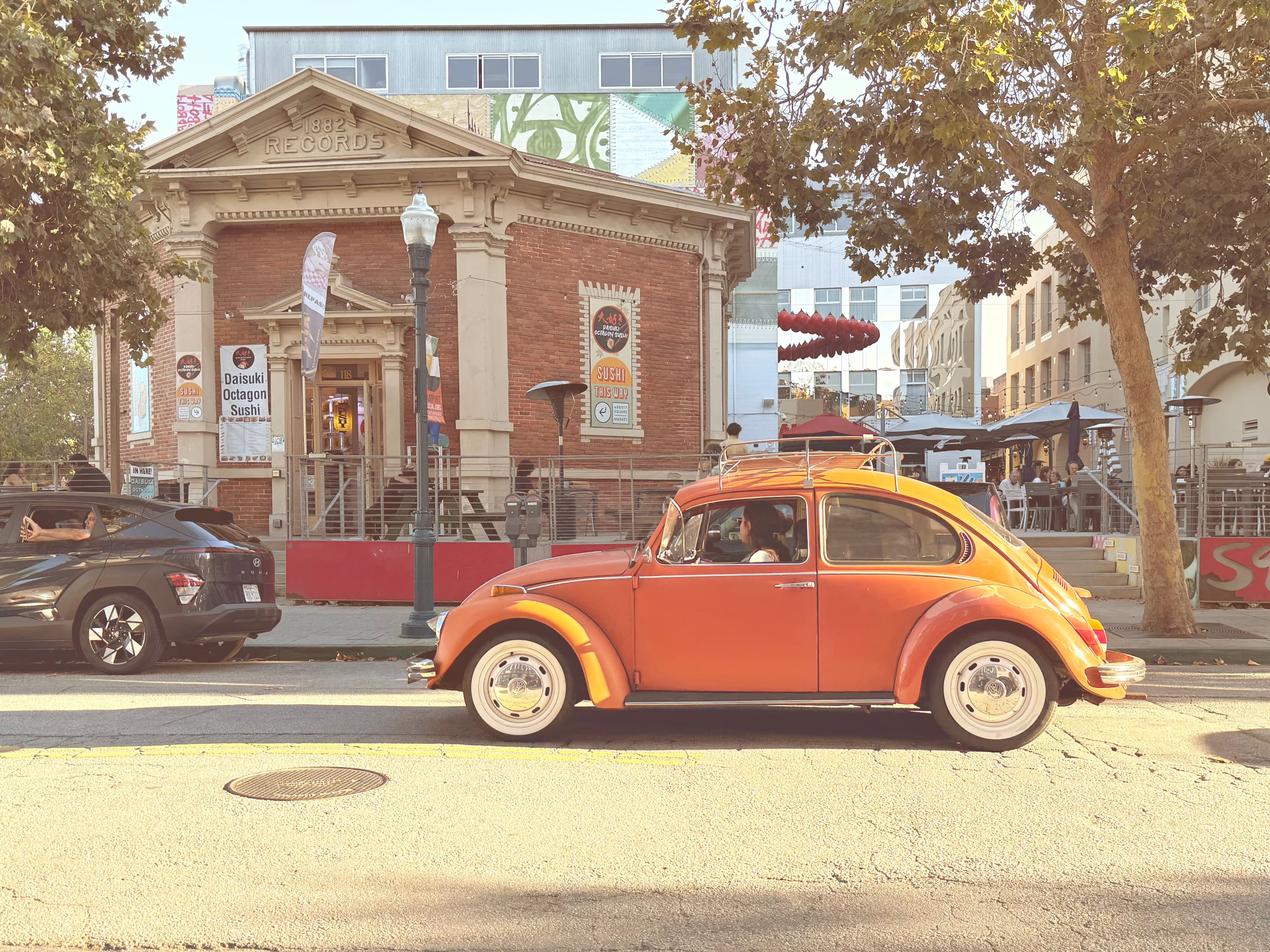
It is 6:48 on a Saturday. A couple in their late seventies are walking past a restaurant on Pacific Avenue. They have a reservation for 7:00 down the block, but they are early. They look at the menu posted by the door of your place. They cannot quite read it in the gray evening light. The font is small. The contrast is low. They squint for ten seconds. They keep walking.
That couple was not your customer. They were also not coming for this visit. They were also part of a category of customer who has decided, over years, that your kind of room is not for them, and you have never heard a single one of them say so out loud.
This is not an accessibility post in the ADA sense, although that part is also real. This is a calibration post. Your room is inclusive in the way you intended it to be. It is also quietly exclusionary in ways you did not intend and cannot see, because you have always been comfortable in your own room.
Who is shutting themselves out
The list is longer than most owners think and includes more customer categories than the team has ever discussed.
Older customers, who cannot read the menu in the dim light at 6:48, who cannot hear the server over the music at 7:14, who cannot manage the stairs at the entrance because of a knee, who are uncomfortable navigating between tables that are spaced for a younger body. They will not complain. They will not return. They will tell their friend at brunch that the restaurant on Pacific is "loud."
Customers with mobility considerations, who notice that the bathroom is up four steps, who see the gap between the bar and the wall is twenty-six inches and they need thirty, who clock the lack of a railing at the entrance. They will scan your space in ten seconds and decide whether to come in. Most of them will keep walking.
Customers with hearing differences, who experience your dining room at 8:14 as an unintelligible roar, who cannot follow the conversation at their own table let alone the server's description of the special. They will eat. They will not enjoy it. They will not be back.
Customers who do not see themselves in the room. The vibe of your place reads as a particular kind of customer. The customers who do not match that read are walking past in the same way the elderly couple did. The signal is not explicit. The signal is the music, the staff, the decor, the price points displayed, the people already in the room. The signal lands, and the customer who does not match the signal does not come in.
Customers with kids, who have looked at your room from the door and decided the kid would not work here. The decision is fast. The decision is rarely wrong. Your room was designed for a customer category that does not include kids on a Saturday at 7:00, and the customer category that does include kids has made their own arrangement.
Customers with sensory considerations, who walk in and immediately notice the overhead lighting, the volume, the smell of the cleaning product, the texture of the room. They will leave within ten minutes if they came in. They will more often have not come in at all.
The list is real. The customers on the list will not tell you. They have made their own arrangement. They are eating somewhere else.
What the silent exit is costing you
The customers who are shutting themselves out are not visible in any data you have.
They are not on the no-reservation report. They never made one. They are not on the walked-out report. They never came in. They are not on a review platform leaving negative feedback. They felt the room was not for them. They are not part of any category your POS tracks.
They are also a meaningful percentage of the customer base you could have. The percentage varies by category and by business. The order of magnitude is usually ten to twenty percent. The math is real. A restaurant in this town that is functionally excluding fifteen percent of its potential customer base is leaving meaningful revenue on the table, and is also being quietly described by the excluded customers, to their friends, as the place that is not welcoming.
The reputation effect is the larger one. The elderly couple who walked past at 6:48 will mention the restaurant at brunch the next morning. They will not be hostile. They will describe it as not for them. The friend at brunch will file the description. The friend, who is similar in age, will not try the restaurant either. The exclusion compounds through the network.
What is actually drifting
You did not design the room to exclude anyone. The exclusion is rarely deliberate. It is the result of a series of small calibration choices that were made for the customer you had in mind, without realizing they were also making the room less welcoming to other customers.
The lighting was set for ambience. The ambience reads as warm to a forty-year-old. It reads as too dim to read the menu to a seventy-year-old.
The music was set for a Saturday night vibe. The vibe reads as energetic to a thirty-five-year-old. It reads as a wall of noise to a sixty-eight-year-old.
The decor was chosen to signal a particular kind of restaurant. The signal lands with the intended customer. It also signals "not for you" to several other customer categories, who walk past at 6:48 and keep walking.
The seating arrangement was designed for capacity. The capacity calculation assumed an average body. The average body excluded a meaningful percentage of the customer base, who cannot navigate twenty-six inches between tables.
None of these were exclusionary decisions in intent. All of them are exclusionary in effect.
The fix is not the inclusion campaign
The fix is not putting a "we welcome everyone" sign in the window. The fix is not training the staff to be warmer to certain categories. The fix is structural, and it starts with noticing.
The cheapest fix is the elderly relative walk-through. You walk through your restaurant with a relative who is twenty years older than your target customer. You ask them to tell you what they notice. You watch their face when they look at the menu by the door. You watch them try to read the printed menu in the dining room. You watch them try to hear the server. You watch them navigate to the bathroom.
The walk-through will produce a list. The list is short. The list includes things like: the menu font is too small, the lighting is too low at the table, the music is too loud at 7:00, the path to the bathroom is too narrow, the bathroom door is too heavy. None of these are dramatic. All of them are calibrations that exclude a customer category.
The fix list is also small. Bigger font on the menu. A pair of reading glasses available at the door. A small dimmer at table four for a customer who asks. Music volume cut by ten percent. A railing at the entrance. A second set of menus printed in larger text, available without a special request. The fixes are cheap. The customer base they unlock is meaningful.
Where the standard slips
The standard for inclusion slips because the calibration is invisible. You cannot see who is not in your room. You can only see who is.
The owners who run inclusive rooms have done the work of noticing. They have walked through with the elderly relative. They have asked the staff which customer categories they see and which they do not. They have looked at their room from the outside, at 6:48, on a Saturday, with a couple in their seventies, and asked themselves what the room is signaling.
The owners who have not done this work are running rooms that are inclusive of the customer they had in mind, and are quietly exclusionary to several other customer categories that they do not have visibility into.
The first group is growing. The second group is the same size it has been for three years and is not sure why.
The Santa Cruz piece
This town has an unusually broad demographic mix in a small geographic area. The university crowd, the retirees, the families, the locals who have been here forty years, the visitors who have lived here ten. Each of these is a customer base. None of them want to be in a room designed for one of the others.
The restaurants in town that have figured out a calibration that works for a broader range are the ones whose dining rooms have a meaningful mix of ages, abilities, and family compositions. The restaurants that have not are the ones with a homogenous dining room and an owner who does not realize that homogeneity is a choice the building is making.
The calibration is the standard. The standard includes who you let in and who you accidentally do not.
If you want a read on who your room is currently set up for and who it is not, that is the work we do. We walk through with several different versions of the customer, on different days, and we tell you what your building is communicating to each of them.