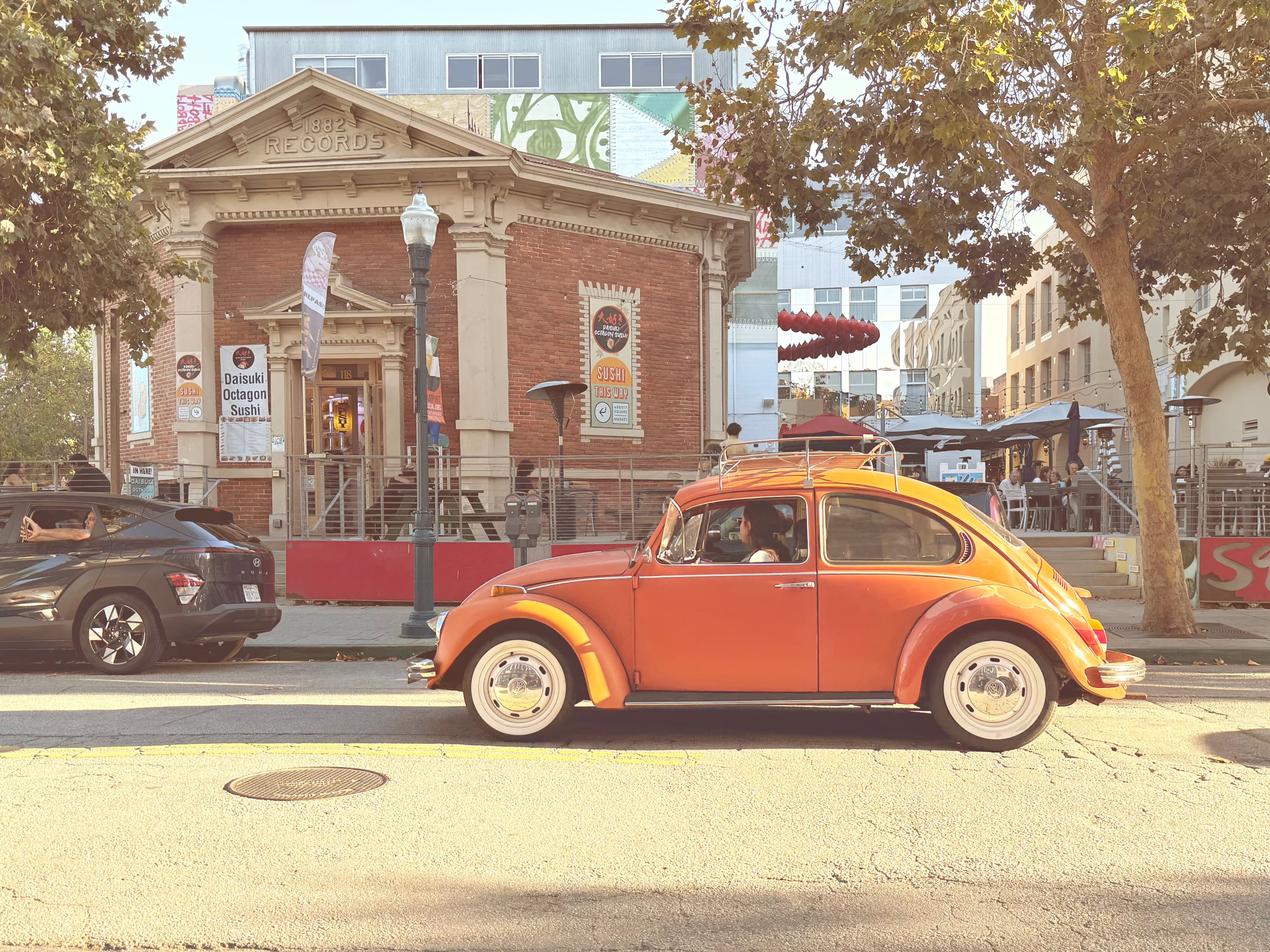
Walk past any downtown Santa Cruz storefront and you will see the gap between what a business meant to do and what it actually does. Two unmarked steps. A doorway you have to squeeze through sideways. A counter that is six inches too tall to sign a receipt if you are sitting in a wheelchair.
None of that was anyone's intent. It is just what happens when a building was designed in 1922 and a business set up shop without thinking hard about who might be trying to walk through the door.
Santa Cruz has a lot of older customers. Some are locals who have been coming to Pacific Avenue for decades. Some are visiting grandkids. And a real percentage of any weekly foot traffic has mobility, vision, or hearing limits, whether obvious or not. If your space and your staff do not make room for them, they quietly go somewhere else. You never know you lost them.
The difference between legal and welcoming
Legal compliance is a floor. It is not a ceiling. A ramp that technically exists but is steep enough to scare someone who uses a walker is a ramp in name only. An aisle that barely hits 32 inches but has a display table sticking out at the end is not really 32 inches.
I am not here to walk you through the ADA. For the specifics of what is required for your building, talk to a CASp inspector or an attorney who handles this for small businesses. California has its own layer on top of federal requirements and the details matter.
What I want to talk about is the part where Legal Minimum and Genuine Welcome diverge. Because the legal part keeps you out of court. The welcome part is what makes someone a regular.
What the physical space is actually asking
A pattern I see constantly in friction audits: business owners have never walked through their own front door while pretending to have a cane, a walker, or a stroller. They have also never sat at their own counter. They cannot see what the customer sees, so they do not know what the customer quietly decides to avoid.
Here are the things that come up most often.
The entrance. A level threshold, or a ramp with an actual handrail, is the whole difference between accessible and theoretically accessible. If you cannot do a permanent ramp, a portable one with a grippy surface is a real option. Clearly mark which entrance is the accessible one if it is not the main door.
The path through. Aisles narrow fast when you start adding seasonal displays, a sandwich board, a stack of boxes you meant to break down. Walk it once a week as if you had limited mobility. Clear the stuff that creeps in.
The counter. A section of your service counter lower than the main surface lets someone sign, see a screen, or hand you a card without straining. You can also skip the counter entirely and bring the terminal to them. Not revolutionary, just thoughtful.
The bathroom. If it is up a flight of stairs or down a narrow hall, that is a hard structural problem. Post a sign to the nearest accessible public restroom. Partner with a neighbor if you can. Acknowledge the gap instead of pretending it does not exist.
What staff do is half the experience
You can have a perfect ramp and still make someone feel unwelcome. And you can have an imperfect space and still make someone feel like they belong there. The difference is people.
The habit to build is simple. Offer help once, clearly. "Can I grab that down for you?" or "Want me to bring this to the counter?" Let them say yes or no. Do not insist. Do not assume.
Face customers when you talk. Most people with hearing loss are not deaf, they are managing. They are reading your lips, they are using context. Mumbling while facing the register is the real problem.
Speak at a normal volume. Louder is not clearer.
Large-print menus cost almost nothing to print and cover a real range of customers, not just older ones. Brighter lighting helps vision issues, helps customers who are trying to read an ingredients label, and helps your staff actually see what they are ringing up. Every upgrade aimed at accessibility tends to benefit everyone who walks in.
Service animals are working. Do not pet, do not offer snacks, do not ask what the diagnosis is. You are allowed to ask if the animal is a service animal and what task it performs, and that is it. Train your team on that so they do not freelance.
Where this fits in your system
If you want this to hold, it has to be a system, not a personality trait of the owner. The best shift leads and managers make accessibility part of opening checklists. Aisles clear. Ramp free of boxes. Ramp dry. Bathroom path unblocked. Counter surface accessible. It takes two minutes and it catches the drift that naturally happens through a busy week.
New-hire training should include a short section on serving elderly and disabled customers, and it should stay short on purpose. Overthinking it is what leads to awkward, performative "special help." The whole move is to treat every customer with the same respect and to add practical accommodation when it helps.
Monday action
Walk into your business from the parking spot. Then from the bus stop. Then from the corner of the block. Notice what slows you down. Notice where you would hesitate if you were a little less sure on your feet, a little less sure of your vision. Write down three things you can fix this week for under a hundred dollars.
Do the three things. Then do three more next month.
This is the pattern in a lot of what I work on with Santa Cruz businesses. Small, consistent changes that remove friction for real customers. If you want another set of eyes on how your space is actually working for people, a Flow Check is a good place to start. Two weeks, real observation, and a clear map of what to do next.
Also worth a read if your building is older: ADA compliance for older Santa Cruz buildings.